The Future Rarely Arrives as a Job Title

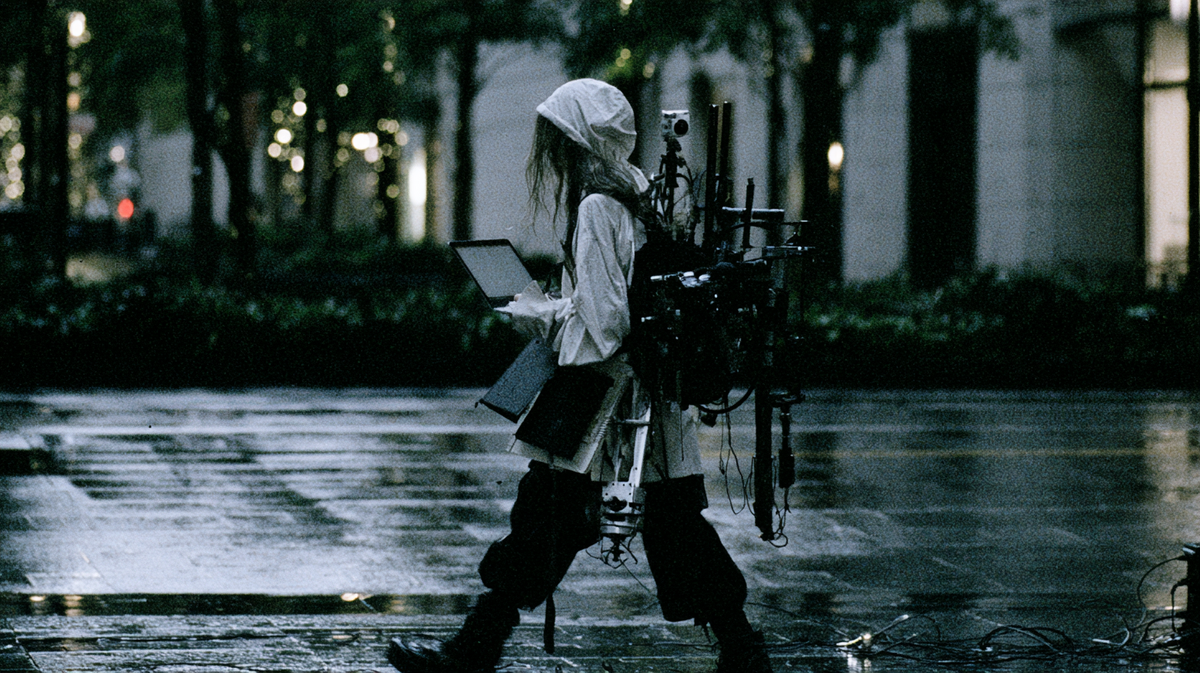
There is a question adults ask children with surprisingly little hesitation.
What do you want to be when you grow up?
It sounds generous.
We are asking about possibility, after all.
But hidden inside the question is an assumption:
that the future already has a name.
Doctor.
Engineer.
Teacher.
Designer.
Entrepreneur.
Choose one.
The child is asked to look toward a world that does not yet exist and answer using categories created by the world that already does.
I have started to wonder whether this is backwards.
Perhaps the better question is not:
What do you want to become?
but:
What are you noticing?
Before a profession, there is often an irritation
A child keeps recording the sounds of trains.
Another spends hours exploring parts of a game that have nothing to do with completing it.
Someone notices that insects have disappeared from a place where they used to be.
Someone else wonders why a button exists if nobody ever presses it.
None of these things look like careers.
They barely look useful.
That may be precisely why they matter.
Before an interest becomes expertise, it often appears as something much smaller.
A fascination.
An irritation.
A habit.
A question that refuses to go away.
Something everyone else walks past, but one person stops to look at.
At that moment, there is no business model.
No market category.
No curriculum.
No job title.
There is only a fragment.
We are very good at recognizing things after they have acquired names
Once something becomes an industry, recognizing it is easy.
Once a profession exists, schools can prepare people for it.
Once a market is measurable, companies can produce strategies for entering it.
Once a trend has a name, everyone can write reports about it.
The difficult moment comes earlier.
When something is happening, but we do not yet know what kind of thing it is.
That period is uncomfortable because institutions are built around categories.
Education needs subjects.
Companies need departments.
Markets need sectors.
People need titles.
But reality is less polite.
New things frequently appear between existing categories.
Climate becomes a labor problem.
AI becomes a cultural problem.
Loneliness becomes an infrastructure problem.
A forgotten social network becomes a question about memory.
An obsolete device becomes a way of understanding technological time.
A child's strange fascination becomes knowledge that does not yet belong to a profession.
The interesting part is often the interval between the fragment and the category.
This is also how SHIRO & Co. began to work
We do not begin by asking:
What product should we build?
We begin with fragments.
Something observed in a market.
Something changing in a city.
An unusual behavior around technology.
A contradiction between what a system was designed to do and what people actually do with it.
A sentence.
A disappearance.
A small shift that may mean nothing.
Then we observe.
We connect.
We ask what the fragment might mean when placed beside another fragment from somewhere else.
The process we use is simple to describe:
Fragment → Observation → Connection → Meaning → Form
The final word matters.
Form.
Not product.
Because we do not know at the beginning what the observation should become.
Sometimes the form is software.
Sometimes it is a business hypothesis.
Sometimes it is a research question.
Sometimes it is an essay.
Sometimes it is a story.
And sometimes the most responsible thing to do is to leave the fragment alone and continue watching.
NOT YET
This was also the starting point for a small project I called NOT YET.
It began with a discomfort about how early we ask children to translate curiosity into occupation.
Instead of asking them to decide what they will become, NOT YET begins somewhere earlier.
What do you keep looking at?
What bothers you?
What do you notice that other people seem not to notice?
What do you do even when nobody asks you to do it?
The project contains twelve short stories about things that have not yet become jobs.
A disappearing sound.
A game that somebody refuses to finish.
Words that do not quite reach an AI.
Objects that carry time.
A subject that does not exist at school.
A day that was never important enough to become news.
They are deliberately small.
Because the point is not to invent twelve futuristic professions.
The point is to remain with curiosity slightly longer.
Read NOT YET — Work That Does Not Yet Have a Name
We may be educating children for categories that will disappear
There is an obvious reason this question feels more urgent now.
AI is beginning to change the relationship between skill and work.
Tasks that once required a profession can increasingly be performed by systems.
New combinations of human and machine capability appear faster than institutions can name them.
But I do not think the answer is to become better at predicting the job titles of 2040.
That repeats the same mistake.
We would still be trying to give names to the future before it arrives.
Perhaps a more durable ability is something else:
to notice.
To remain interested in something before anyone can explain why it matters.
To connect things that belong to different categories.
To tolerate an unanswered question.
To recognize a weak signal before it becomes an obvious one.
These are not merely skills for children.
Companies need them too.
So do researchers.
So do governments.
So do creators.
The future often begins as something embarrassingly small
We tend to imagine the future arriving dramatically.
A breakthrough.
A product launch.
A new industry.
A crisis.
But much of the future probably begins in quieter ways.
Someone notices that a familiar place feels different.
Someone uses a technology incorrectly.
Someone keeps a broken object for reasons they cannot explain.
Someone asks a question that does not fit the meeting agenda.
A child becomes obsessed with something adults consider pointless.
Most fragments disappear.
Some turn out to mean nothing.
But occasionally, one connects with another.
And another.
A pattern appears.
Meaning begins to form.
Only much later do we give it a name.
A market.
A profession.
A product.
A movement.
By then, the interesting part has already happened.
So perhaps the question is not:
What will this become?
Not yet.
First:
Why did you stop here when everyone else kept walking?